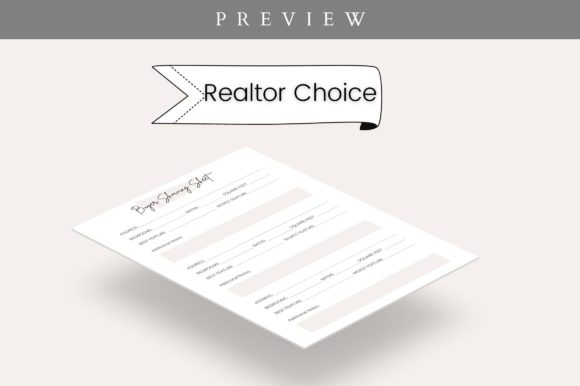
Streamlining Client Presentations with an Editable Real Estate Buyer Showing Sheet
In the fast-paced world of real estate, the difference between securing a client and losing them often comes down to preparation and presentation. Agents are constantly juggling property viewings, contract negotiations, and market analysis. Amidst this chaos, the Editable Real Estate Buyer Showing Sheet serves as a critical organizational tool that bridges the gap between raw data and a polished client experience. This document is not merely a checklist; it is a strategic asset designed to help agents build their brand, instill confidence in buyers, and streamline the entire property viewing workflow.
For professionals aged 20 to 50 who manage their own businesses or freelance careers, efficiency is paramount. The modern realtor operates more like a marketing agency than a traditional salesperson. Consequently, the tools they use must reflect a high standard of professionalism while remaining flexible enough to adapt to unique client needs. A pre-built, customizable template allows agents to focus on the human element of the transaction rather than getting bogged down in graphic design or formatting issues.
Integrating the Showing Sheet into Your Sales Workflow
The utility of a Buyer Showing Sheet extends far beyond the actual property tour. To maximize its value, it should be integrated into three distinct phases of the client journey: pre-showing preparation, the active viewing process, and post-tour follow-up.
Phase One: Preparation and Branding
Before meeting a client, an agent must curate a selection of properties that match specific criteria. This is where the editable nature of the template becomes invaluable. Using a platform like Canva, agents can quickly input property details, adjust fonts to match their personal branding, and swap out placeholder images for actual listing photos. This level of customization ensures that every document handed to a client reinforces the agent's identity. It signals to the buyer that the agent is organized, detail-oriented, and invested in their search.
The ability to resize the document to any format—whether standard 8.5 x 11 inches for printing or optimized for digital tablets—means the tool fits seamlessly into various working styles. Some agents prefer handing out physical copies during a tour for clients to take notes, while others share PDFs via email immediately after the showing. A versatile template supports both approaches without requiring duplicate work.
Phase Two: The Active Viewing Experience
During the property tour, the showing sheet acts as a structured guide. Real estate decisions are emotional, but they must be grounded in facts. A well-designed sheet provides designated spaces for noting square footage, lot size, year built, and HOA fees alongside subjective observations like "natural light" or "kitchen flow." By having these categories pre-defined, the agent guides the client's attention to the most critical features of the home.
Furthermore, using a consistent template across multiple showings allows for easier comparison later. When a client has seen ten homes, details begin to blur. A standardized layout helps them recall specific attributes of each property, facilitating a more informed decision-making process. The visual consistency also reduces cognitive load, allowing the client to focus on the home rather than deciphering a new format at every stop.
Phase Three: Post-Tour Analysis and Follow-Up
After the tours conclude, the showing sheet transforms into a decision-making matrix. Agents can review the completed sheets with their clients to narrow down the list of contenders. Because the template is editable, agents can easily add summary notes, pros and cons lists, or next-step action items directly onto the document before sending it back to the client. This immediate follow-up keeps the momentum going and demonstrates proactive service.
Leveraging Design Tools for Professional Consistency
The shift toward digital design tools has democratized high-quality marketing materials. Platforms like Canva have become essential for entrepreneurs and small business owners who need to produce professional assets without hiring a dedicated designer. The Editable Real Estate Buyer Showing Sheet leverages this technology to offer a balance of ease and sophistication.
When utilizing these templates, the focus should be on usability and consistency. The template typically includes instructions for editing elements such as background colors, fonts, and images. This flexibility allows an agent to align the document with their website, business cards, and social media presence. For instance, if an agent's brand utilizes a specific shade of navy blue and a modern sans-serif font, the template can be adjusted instantly to reflect this. This cohesion builds trust; clients perceive a unified brand as more established and reliable.
It is important to note that while the template provides the structure, the content remains the agent's responsibility. Users must replace placeholder images with actual property photos to ensure accuracy. This step is crucial for maintaining integrity and avoiding confusion. The template serves as a frame, but the agent fills it with the substance that drives the sale.
Practical Implementation Tips for Busy Professionals
Adopting a new tool requires a slight adjustment in routine, but the long-term time savings are significant. Here are practical strategies for integrating these templates into a daily workflow:
- Batch Editing: Instead of customizing a sheet for each property individually, set aside time to update the master template with your current branding elements. Save this as your "Master File." When a new listing comes up, duplicate the master and simply swap the text and images. This reduces the setup time from minutes to seconds.
- Digital and Physical Hybrid: Download the template in PDF format for high-quality printing, but keep the editable link handy for last-minute changes. If a price drops or a feature changes right before a showing, you can update the digital version instantly and email it to the client while handing out the printed copy as a backup.
- Client Collaboration: Encourage clients to use the sheet as a collaborative tool. If you are conducting a virtual tour, share your screen with the editable document open (in view-only mode) and fill it out together in real-time. This interactive approach keeps remote clients engaged and ensures their feedback is captured accurately.
- Archive and Review: Maintain a digital archive of all completed showing sheets. Over time, this becomes a valuable dataset. You can analyze which features your clients prioritized and why certain properties were rejected. This insight helps refine your search criteria for future buyers, making you a more effective agent.
Enhancing Efficiency Through Standardization
One of the greatest challenges in real estate is maintaining quality control when volume increases. As an agent gains more clients, the temptation to cut corners on administrative tasks grows. Using a pre-built Real Estate Marketing Template mitigates this risk. It ensures that every client, regardless of how busy the agent is, receives the same high standard of documentation.
Standardization also aids in delegation. If an agent works with an assistant or a transaction coordinator, the template provides a clear protocol for how information should be presented. The assistant can populate the sheets with listing data, knowing exactly where each piece of information belongs. This clarity reduces errors and frees up the agent to focus on negotiation and relationship building.
Moreover, the versatility of file formats—PNG, SVG, JPG, PDF—ensures compatibility with various communication channels. Whether sharing a quick snapshot via text message, embedding an image in a blog post, or attaching a formal PDF to an email, the content remains crisp and professional. This adaptability is essential in a multi-channel communication environment where clients expect information in their preferred format.
Long-Term Value and Brand Building
Beyond the immediate transaction, the consistent use of high-quality showing sheets contributes to long-term brand equity. In an industry driven by referrals and reputation, the small details matter. A client who receives a beautifully organized, easy-to-read summary of their home search is more likely to remember the experience positively. They are also more likely to recommend the agent to friends and family.
For those looking to expand their presence on social media, these templates offer additional utility. Sections of the showing sheet can be repurposed into Instagram stories or Facebook posts highlighting "Just Showed" properties. By maintaining the same visual style, the agent creates a recognizable aesthetic that stands out in a crowded feed. This cross-pollination of materials maximizes the return on investment for the time spent creating the content.
Ultimately, the goal of any business tool is to reduce friction and enhance output. The Editable Real Estate Buyer Showing Sheet achieves this by removing the technical barriers of design while providing a robust framework for information management. It allows real estate professionals to operate with greater confidence, knowing that their backend processes are as polished as their frontend interactions. By adopting such tools, agents not only save priceless time but also elevate the standard of service they provide, positioning themselves as leaders in a competitive market.